Do you know how some companies climb to a trillion‑dollar market cap? How do citizens in certain countries enjoy basic conveniences even in adverse weather conditions? And why do only a few companies or nations achieve sustained long‑term growth while others struggle?
An ecosystem forms the basic foundation of any sustainably healthy developed society. Building such a system takes time, as the process is iterative, but once established, its benefits compound over generations. This applies equally to individuals, societies, and companies. But in general it is not an eye-catcher and is very underrated until we pay close attention to successful people, companies, and society.
Without Ecosystem:
In 1990, my father, then forty years old, commuted to work on his bicycle. After returning home each day, my younger brother—who was in class five—taught himself to ride that same bicycle, gradually progressing from half‑pedalling to full‑pedalling. I was a bit slow to learn and began only two years later. This experience was common among many middle‑class families of that era. We also often heard of bicycles being awarded to top‑performing students in secondary and higher‑secondary schools.
Cycling remained my primary mode of transport until graduation. However, once I moved to tier‑II and metropolitan cities for work, it became impractical—largely due to longer travel distances, time constraints, but most importantly safety issues, inadequate infrastructure, and the absence of a supportive ecosystem. Today, although electric (rental) bicycles are available in some cities, road cycling remains limited and far from sustainable in most urban environments. In a busy and rapidly developing nation, only a very small percentage of people use bicycles as their main mode of transport.
With (Society) Ecosystem:
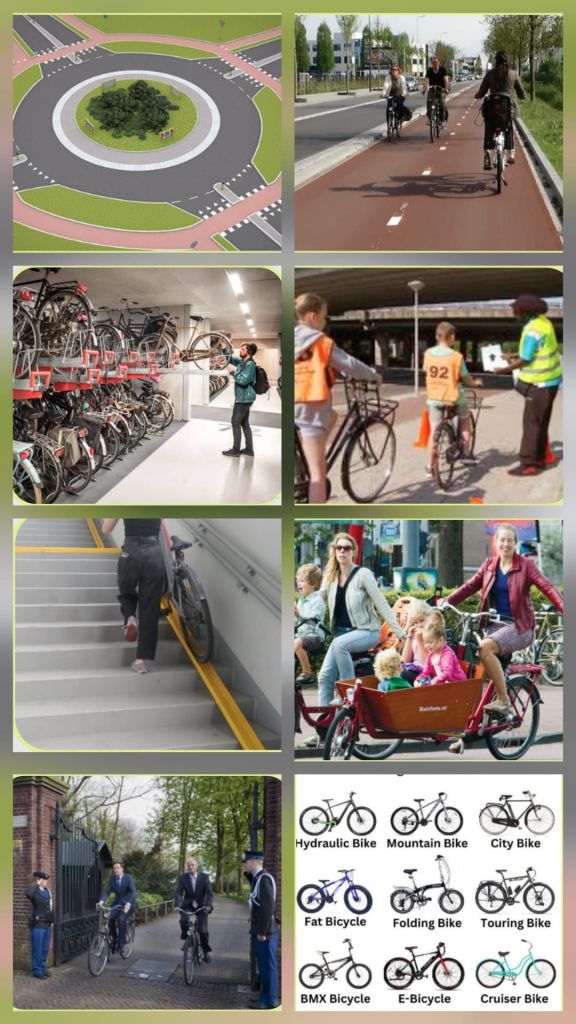
In some countries, and specifically one particular country, cycling is deeply embedded in everyday culture. This practice was adopted decades ago and has become a routine part of life. From school‑going children to retired citizens, people use bicycles as their primary mode of transport. It is a nation where bicycles actually outnumber people, with roughly 1.3 bikes per person, and where about 28% to 36% of all trips are made by bicycle. There is no concept of ‘free cycles’ or symbolic giveaways; the system works because a strong, well‑designed ecosystem has been built around it.
- Priority: Cyclists are given higher priority than motor vehicles on the road. This emotion triggers the action.
- Red Carpet: Dedicated cycle tracks throughout the country, also in rural areas. Sometimes, these tracks are better and wider than normal roads.
- Formal Training: Students get cycle lessons about rules and hand signs and safety measures like the use of cycle lights during night rides in their primary schools and need to qualify it.
- Infrastructure: Dedicated public and private parking close to bus and train stations. We can find multi-storey parking only for cycles.
- Social Acceptance: Cycling is popular among people of all ages and social backgrounds. Both the government and citizens contribute to this.
- Innovation: Types of bikes like electric, normal, and speed bikes. There are different features in cycles, like backpedaling as a brake.
- Other Benefits: Society is healthy. Employees get tax benefits on the riding cycle. Few maintenance costs. Few Traffic Jams. The government doesn’t have to pay huge oil import bills.
With (Company) Ecosystem:
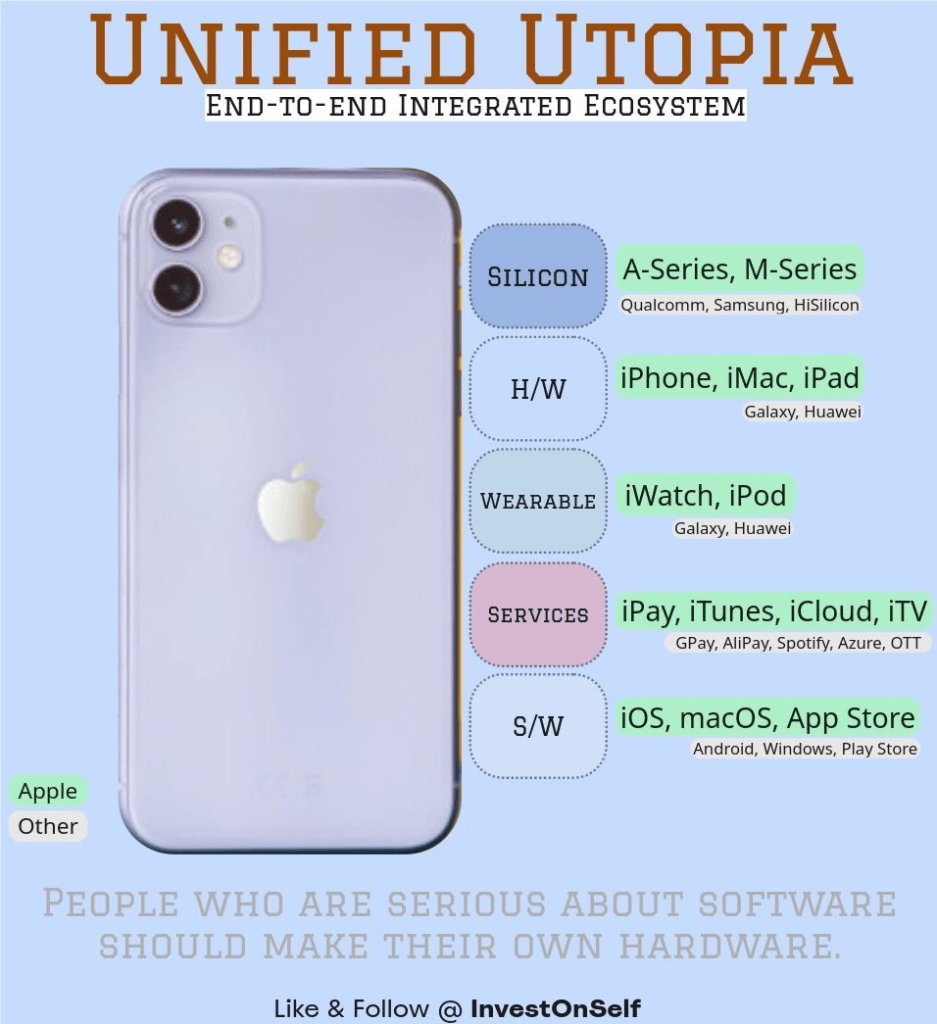
We are all familiar with Apple—the first company to reach a trillion‑dollar market cap—because its products have become part of our daily digital lives. Its end‑to‑end integrated ecosystem has not only achieved extraordinary commercial success but has also transformed multiple segments: hardware through the iPhone, iPad, Mac, iPod, and AirPods; software through operating systems; and services through a rapidly expanding digital offering. No other company in the mobile‑technology space has built such an ecosystem.
With (Individual) Ecosystem:
The role of family, friends and living environment plays a decisive role in shaping our habits, behaviours, and long‑term interests. The best examples are the Polgar sisters (for chess) and the Phogat family (for wrestling).
Polgar Sisters: A Hungarian educational psychologist and chess teacher designed such an ecosystem for his daughters. He packed the house with thousands of handwritten game records, filing cabinets, and tactical study guides. He homeschooled the sisters to focus on chess, and rest is history.
Geniuses are made, not born.
And we know more or less about the Phogat wrestling family. Through disciplined training, a supportive environment, and a strong family‑driven ecosystem, they rose to excellence.
 InvestOnSelf
Leave a comment