Before diving into some behavioral strategies and their role in our ecosystem, let’s learn about a game and its impact on our behavior:
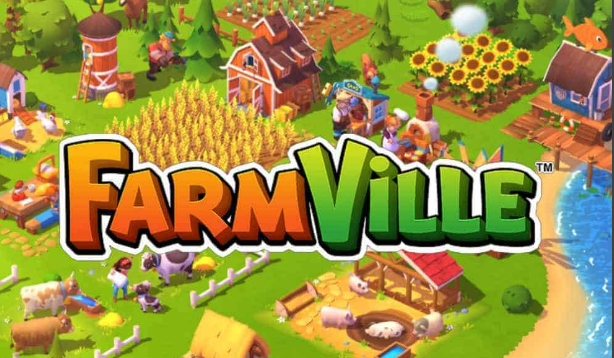
Farmville, a well-known online game, was played by 84 million people at its peak in 2010, similar to the population of Italy. It is a gamified version of real agricultural life where we are given actions like plowing land, growing, planting and harvesting drops, trees, raising animals, earning virtual money, etc. With simple features to play, hints, and the player’s avatar, it became addicted. It is a commitment to virtual life, and any negligence has consequences. Our investments, with respect to time, effort and money, die out If we don’t return to the game. So we must return to get back the hard-earned reward and virtual money.
Sunk Cost:
Do you finish the boring movie or come out of a movie theatre for which you bought a ticket?
Cost (with respect to time, money or energy) that has already been invested in the past can’t be recovered or reversed. It is always good to avoid sunk costs. Sunk costs are not easy to see, and it is difficult to realize that something is gone forever.
Farmville‘s players never get back the time, money and effort they spent, but they keep playing to avoid negative emotions like FOMO, boredom, etc.
Take a moment and think: do you see any sunk costs around yourself?
IKEA effect (Hooked):
Why does the gamified application notify us to practise more to get the powers back (here they are hearts) to resume the game?
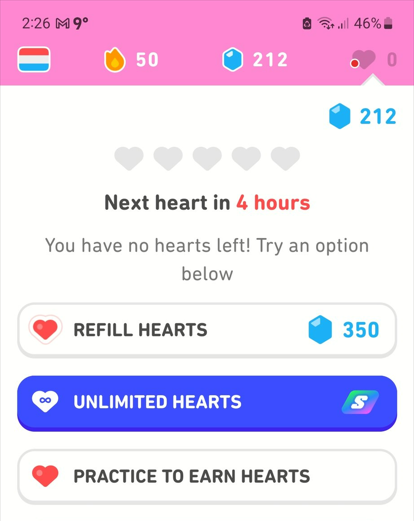
This is a cognitive bias in which consumers are willing to pay more for objects (like furniture) that they assemble or partially create by themselves. This has been treated as an investment in habit-forming products like online games, etc. to bring back consumers to the product again and again.
Farmville’s players need to earn by themselves, which they value highly, and come back not to lose hard-earned rewards.
Goldilocks Zone (AH):
Do we follow our own speed or the speed of Olympic participants (which represent extremes) while walking or running?

This principle states that we should not take extreme challenges, like those that are too easy or too difficult to execute. Instead, we should take the challenges that are just right. This will help to keep our habits on track. The same is applicable in investing: stay away from high-risk investments like crypto, futures, and options trading unless you are a professional.
Farmville’s players become addicted due to the simple agricultural actions and corresponding rewards.
Scarcity Effect (Hooked):
Why do some products on the world’s biggest retail websites shows “Only 1 left in stock — order soon”?

This scarcity strategy changes our perception of value of an item. Value of an item is directly proportional to scarcity.
Also, this can be observed in our society, as we don’t value if we have it. And those who don’t have it, knows the importance of each small thing. Two well-directed movies, “The Boy who harnessed the wind” and “12th Fail”, depict the same.
Zeigarnik effect(DW):
Do you feel stressed when a given task is incomplete?

Our brain remembers the incomplete task and forgets the complete task. This is known as Zeigarnik effect, named after psychologist Bluma Zeigarnik. So When we work, work hard and When we are done, be done and make a plan for incomplete task, as part of shutdown ritual, to overcome this effect and bring next day productivity.
Point-and-calling Strategy(AH):
Do you speak out for items that need to be included in packing for our next trip?
Point and calling Strategy makes us slow down for a moment, transform non-conscious actions to conscious one by enabling sensation (like eyes, ears, mouth) to calling out important indicators and ensure safe operation. This strategy is used by Japanese Railway system to avoid the human error by pointing out the important indicators (like Signal 100, break released, depart) and achieved significant reduction in errors.
Paper-clip Strategy(AH):
Do you like to see progress on your daily habits and actions weekly, monthly or yearly?
Eye level is buy level.- Choice Architecture.
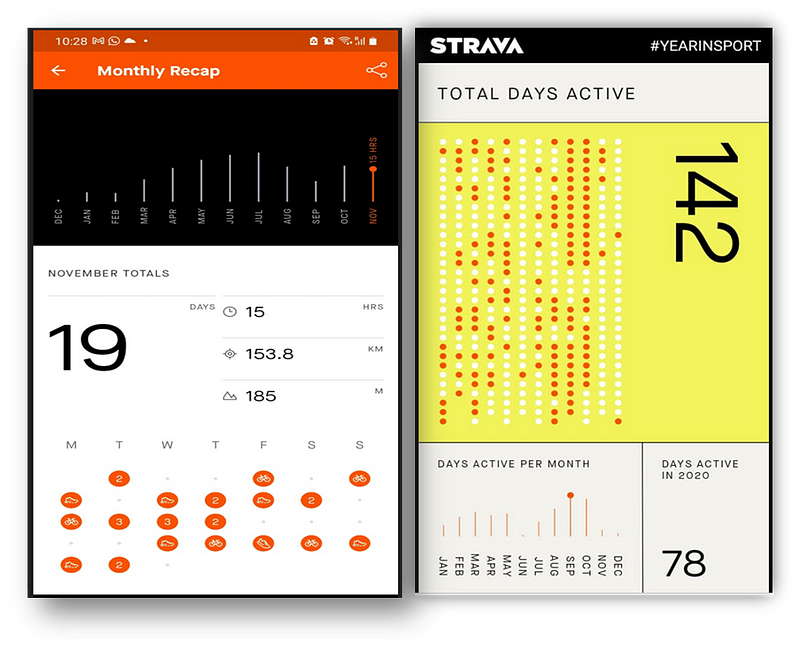
This strategy is a simple way to track your daily habits, actions, which bit cumbersome in digital ecosystem. This gives the feel of visual progress, a sense of accomplishment, motivation in both short term and long term. Some habits can be tracked implicitly with digital footprint & connected devices like above. Or we can simply move one clip from one (undone) jar to another (done) jar after completion of small tasks each day.

Mind Sculpture (Kaizen):
What helped Michael Phelps to achieve extraordinary success in 2008 Olympics?

This strategy implies ourselves to perform a task in our mind by imagination & feel that real action. Repeat same over time. So we will get better when we actually perform it in real life. This needs to be practiced before some days of the actual event, repeatedly in a disciplined manner.
Packing Party Strategy(DW):

Pack our stuff as if we are moving out. Then, with time, we unpack the stuff which we need. In the end, we will come to know that we need very few of them and can recycle, donate or sell unused items. This unpacks the simple life with a minimalist approach. This minimalist approach lead to less distraction.
The same can be applicable to mobile phone apps, laptop files and folders, etc. to declutter the things.
Do you know How to create a habit-forming product?
Then click on this Case study with book Hooked.

 InvestOnSelf
Leave a reply to Ease of Reading & Creating Habits – InvestOnSelf Cancel reply