This book outlines the about the Steve Jobs, his carrer path, his tech vision, his subtle details, his unfiltered counterculture and many more. The author of this book has presented key details of both sides. Let’s explore some key points of this book, and we are pretty sure you will come to know something new.
CANNIBALISATION:
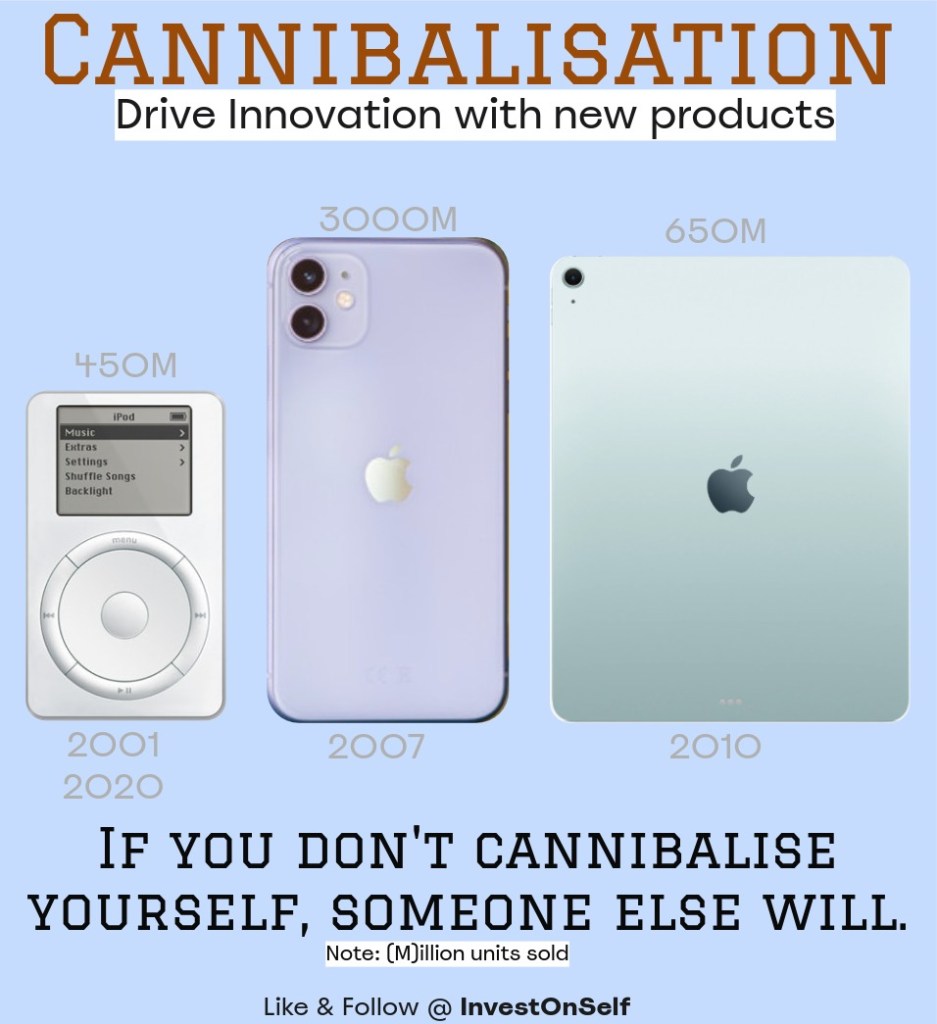
As the company, Apple, pushes innovation and launches new products and services, it risks cannibalising the sales of its existing products. Steve was never reluctant about it; instead, he prioritised product- and service-driven innovation.
1000 songs in pocket 🎶:
In 2001, the iPod launched with 1000+ songs of storage, simple navigation and easy portability features, which took the company to the next level from its existing PC business. Also, that iconic product was very different and unique from the existing music and CD players. The other existing company like Sony who ruled for decades with Walkman didn’t catch up the innovation and worried about cannibalism strategy.
Trillion-dollar Club 🚀:
In 2007, the iPhone launched as the next version of the iPod plus cellular phone and Internet access. Like the iPod, the iPhone has simple and unique features unlike existing players. For sure, the iPhone ate up the sales of the iPods, as it was discontinued in 2020, but it took the company to the trillion-dollar club.
In 2010, the iPad launched to simplify content creation and content consumption with better user experience. This challenged the laptop segment sales too.
AMALGAMATION:
Pixar Studio: 🎬🎬
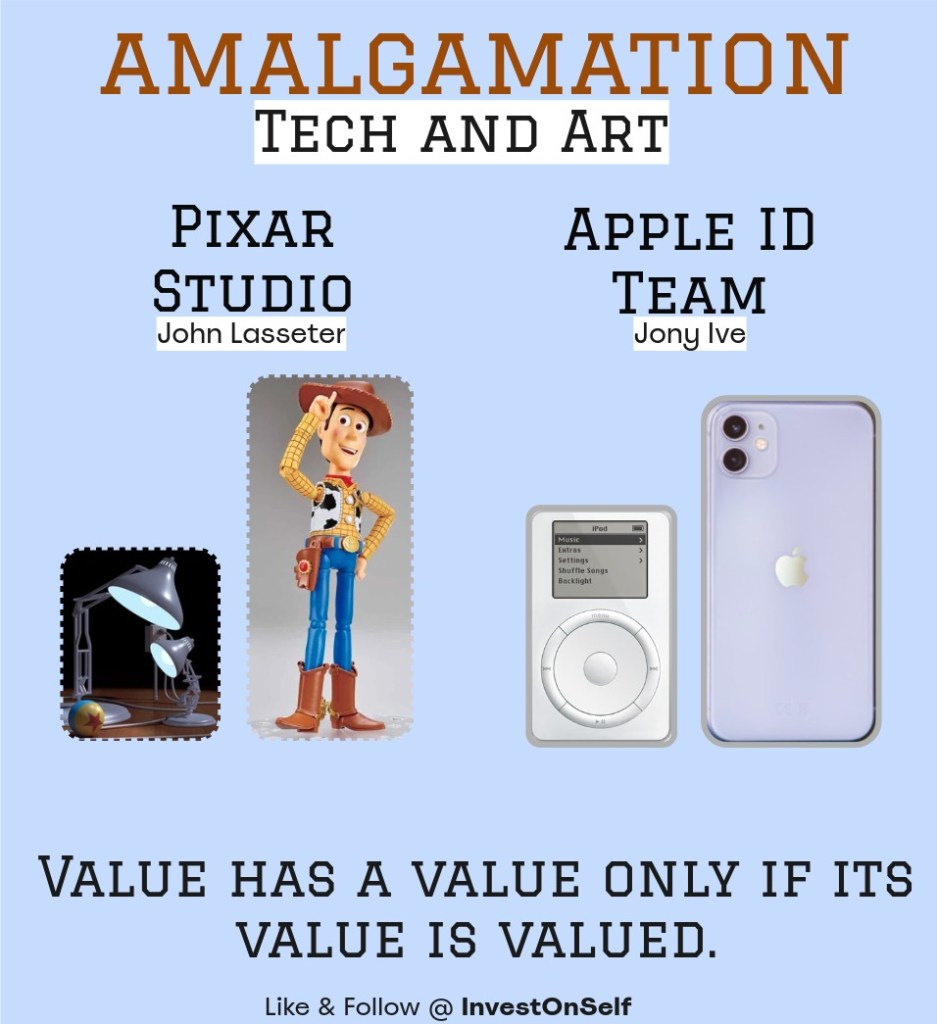
In 1985, Steve visited Lucasfilm’s computer division, which developed hardware (aka the Pixar computer) and software (Reyes: ‘Renders everything you ever saw’) for rendering digital 3D images. He was amazed by the creative shorts and suggested Scullery, then Apple CEO, buy the company for Apple. George Lucas, the producer and owner of Lucasfilm’s, wanted to divest, as he didn’t foresee its value.
Steve recognised the potential of nascent rendering tech with creative team and invested $10 million to own a 70% stake in 1986. Soon, the same company was attracted by specialised clients from the medical industry and intelligence fields. In the same year, the Luxo Jr short film, written and directed by Lasseter, came to the limelight and was nominated for an Academy Award. In 1995, the first computer-animated adventure comedy movie, Toy Story, released by Pixar and Disney Studios, recorded massive financial success.
ID Team: 📳📳
In 1997, on his return back to Apple, Steve held several meetings to make a turnaround plan for the existential crisis. The portfolio of products was large but lacked a wow factor, and he exclaimed that “The products suck.”
Coincidentally, he visited the ID team led by Jony Ive and found the previous CEO & development team never considered the ID team’s proposed design. From that moment onwards, the ID Team was at the top of the pyramid structure org to take creative design decisions for products. The team designed iconic products like iMac, iPod, iPhone, iPad etc.
ADAPTATION:
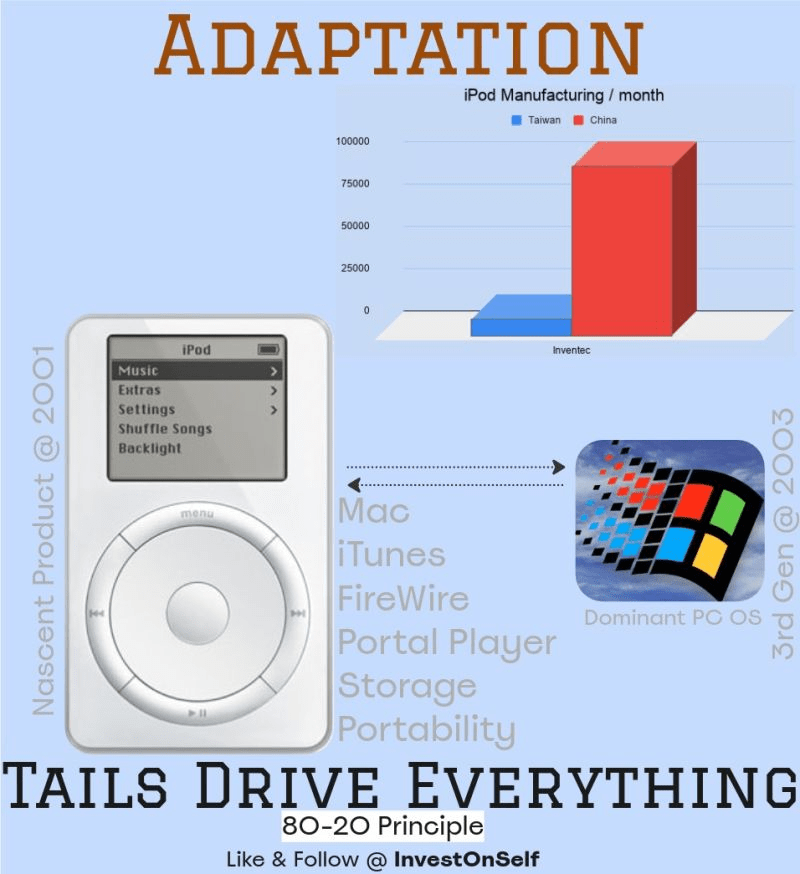
Music players like the Walkman and CD players ruled for decades. Their bulky size and slow navigation – most importantly, 320 million CDs were sold in the US – triggered the company Apple to think about the product related to the music business. Initially, the storage size in a limited space was the constraint, but they found a hard drive with a storage capacity of up to 5 GB on their visit to Toshiba, Japan.
Steve Jobs wanted to increase the Mac sales using their new music player product, which he envisioned with subtle details and had the following key features:
➡️ Portable: Size of a card deck.
➡️ Ability: Easy to navigate with a scroll wheel.
➡️ Better power management.
➡️ Capacity: Store 1000+ songs (5 GB)
➡️ Playlists only on iTunes.
But still, the device sales results were underwhelming, as it was not reachable by the masses. Steve stuck to the vision of Apple’s own unified utopia, a closed, perfect ecosystem; the iPod required a Mac to function.
AFFORDIBILITY:
In 1970, Xerox PARC had been established to create ground for digital ideas related to personal computers. The scientist Alan Kay pushed the vision of a small personal computer and other user-friendly options, like:
➡️ Replace the intimidating command-line prompt (like DOS) with the user-friendly graphics user interface.
➡️ Use the mouse to click the folders on the computer GUI screen.
➡️ Use bitmapping instead of character-based displays.
➡️ Use of an object-orientated programming language.
➡️ Network of computers.
💡 Reluctance:
In the summer of 1979, Steve made a condition to Xerox Capital Ventures to invest millions of dollars in Apple only if Xerox would open the kimono at Xerox PARC for them. Initially Xerox engineers were reluctant to disclose the gold mine to the Apple team and tried to distract the team. But Steve became restless and called the Xerox Capital head and kept pushing for details.
💡 Disclosure of Hidden Treasure:
When Xerox engineers disclosed the hidden treasure following the top-down order, which they had been working on for a long time, the Apple team were gawking at the GUI, resolution and whole system.
Steve mentioned, “I can’t believe Xerox is not taking advantage of this gold mine.”
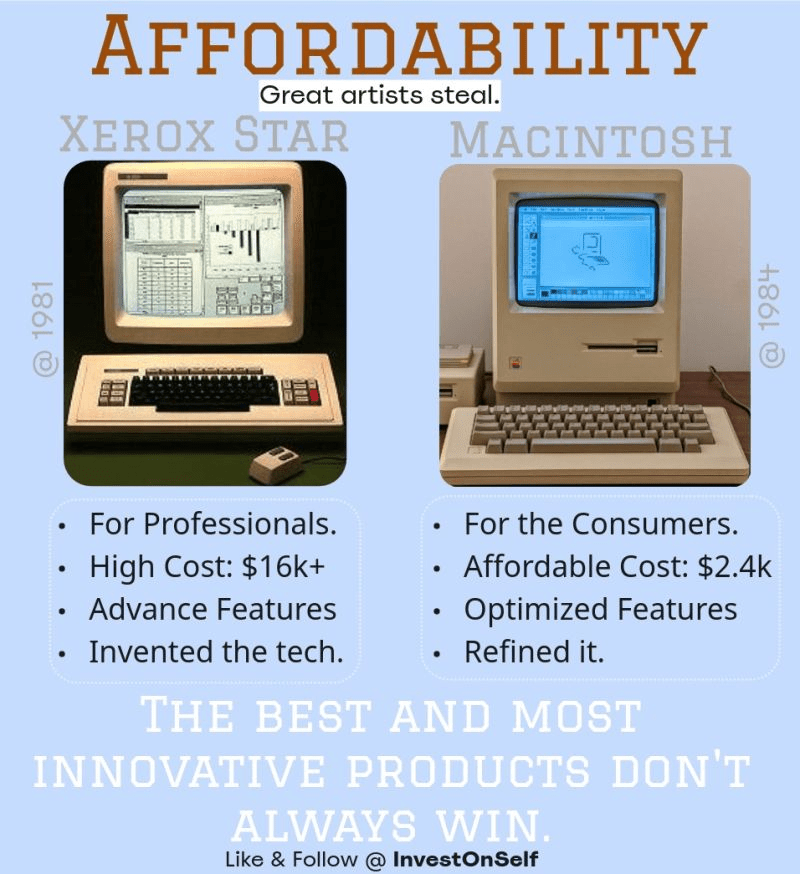
On their return to the Apple office, Steve asked the team, “We have got to do this, and how long will it take to implement?” And in 1984, the launch of the Macintosh, with fewer and refined features with an affordable price tag, was a revolutionary success, unlike the Xerox Star, which invented the technology.
Patent:
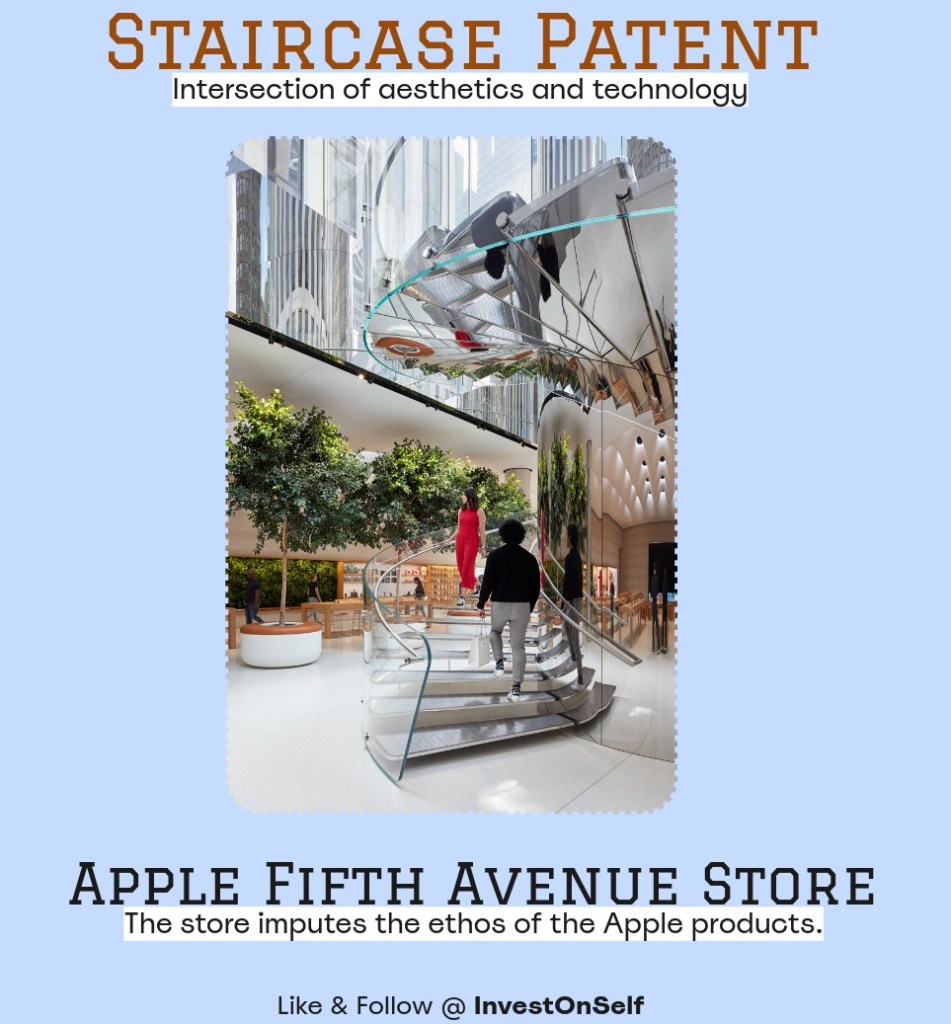
We are aware of patents related to technology, product features and design by innovative tech companies. But Apple has gone one step further to showcase its value and importance in everything it does, from packaging to marketing to the store.
Steve was known for his subtle details in his work & its ecosystem. And the same was reflected while designing the store.
The staircase patent (USD478999S1) is for the see-through look that features all-glass treads and glass supports melded with titanium.
Also, the company has some patents related to the packaging of the apple products.
Some key details about the Fifth Avenue store:
➡️ More foot traffic annually than the Statue of Liberty or Empire State Building.
➡️ Minimalist Design: More space with fewer products.
➡️ A cube with a staircase to enter this store that is open 24/7-365 days.
➡️ Sales are tabulated every four minutes to predict instant information to integrate manufacturing, supply and sales.
Steve deep-dived into end-to-end details like number of entrances, type of window, selection of store location, staircase, etc., as he believed stores are the physical representation of a brand.
Do you know how the semiconductor chip industry evolved over time and to different countries?
Then just click Chip War.
 InvestOnSelf
Leave a comment