This book outlines the impact of semiconductors in the defence, space and consumer segments. The author of this book has an outstanding background in this domain. Let’s explore some key points of this book, and we are pretty sure you will come to know something new.
Sputnik Moment:
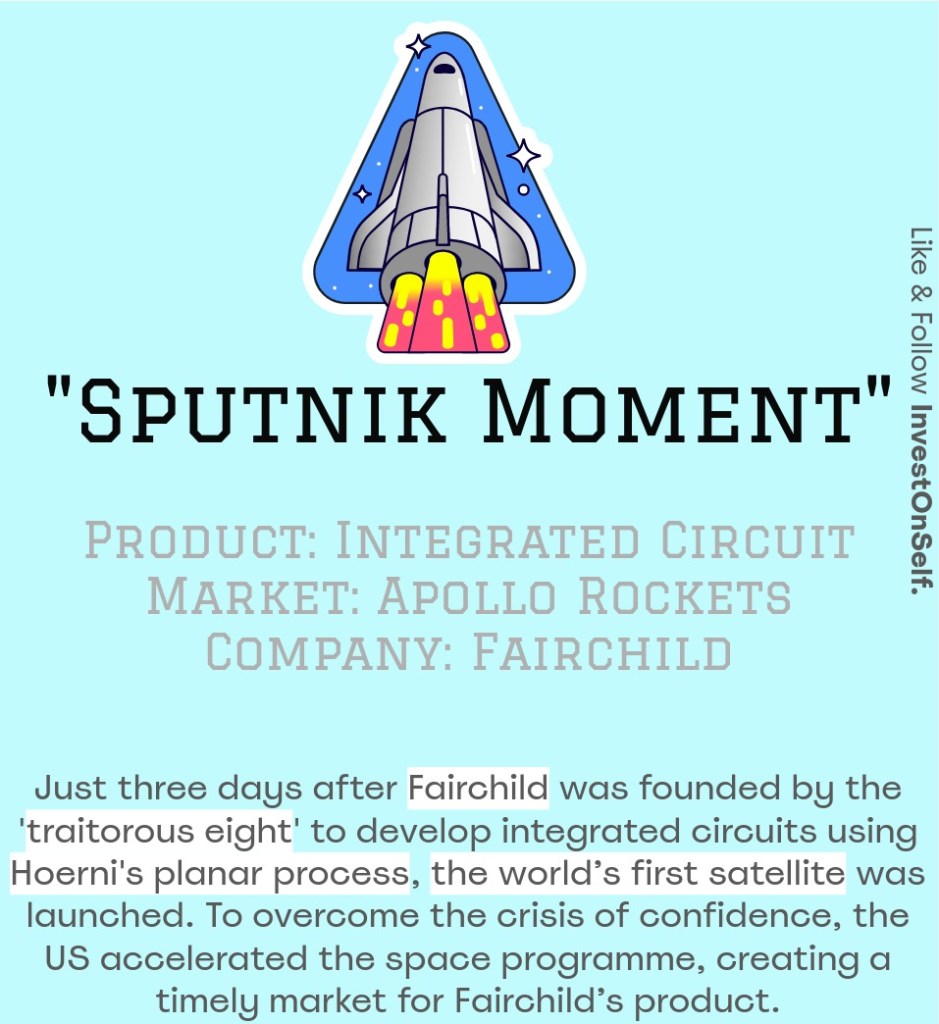
Eight engineers left Shockley Labs, the first high-tech company, for its toxic environment and founded a startup, Fairchild Semiconductor, with seed funding to fabricate ICs with Hoerni’s planar process. ICs take less space, consume less power and are more reliable than vacuum tubes but were estimated to be more expensive. Three days after the foundation, the world’s first satellite, Sputnik, was launched by the Soviet Union. To overcome the crisis of confidence and keep scientific dominance, the US launched the space programme, and the company had a market for its product.
The Transistor Salesman:
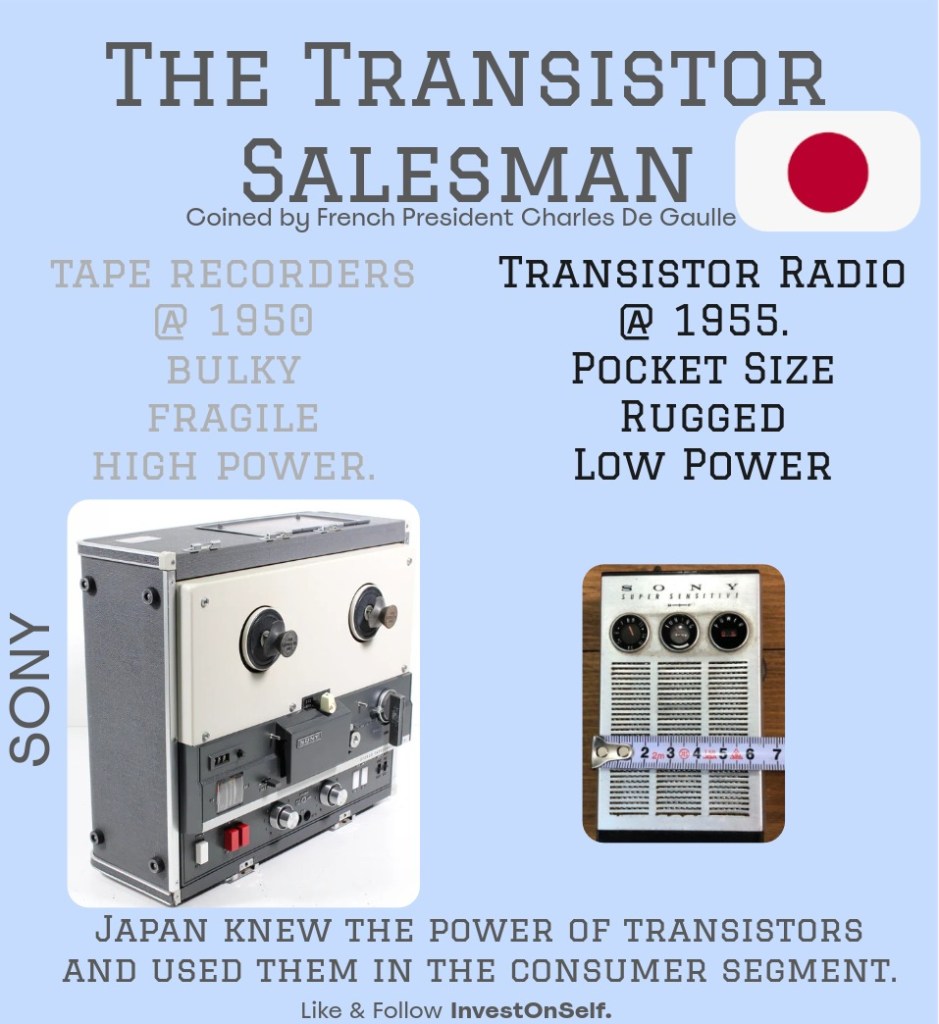
In 1962, the then Japanese PM Ikeda went to France for the first time after the war and gifted a transistor radio to the then French president De Gaulle. The French president was impressed by the state-of-the-art product and mentioned his counterpart as “the transistor salesman”.
- Japan’s journey to mastering transistor technology and building world-class consumer products was far from straightforward.
- Sony created vacuum tube-based tape recorders which were bulky and non-portable. So they were looking for tech with less space.
- In the meantime, the US inventors Bardeen, Brattain and Shockley invented the transistor in 1947 and published their invention in Science Magazine. The curious Japanese came to know about these magazines and this invention from US Military Headquarters in Tokyo.
- In 1953, AKIO, founder of SONY, travelled to the US and got a transistor licence from Western Electric.
- The Japanese elite task force had gone through books written by Shockley and the Iwama Reports. They discovered the NPN-grown transistor was more useful than PNP because negative charge carriers, or electrons, travel faster than positive ones, or electron holes.
- In 1955, they completed a TR-55 transistor radio with 5 transistors; three were grown-junction and two were alloy-junction transistors. Moreover, the product was more reliable and portable and consumed less power.
Chip Manufacturing – Fabs:
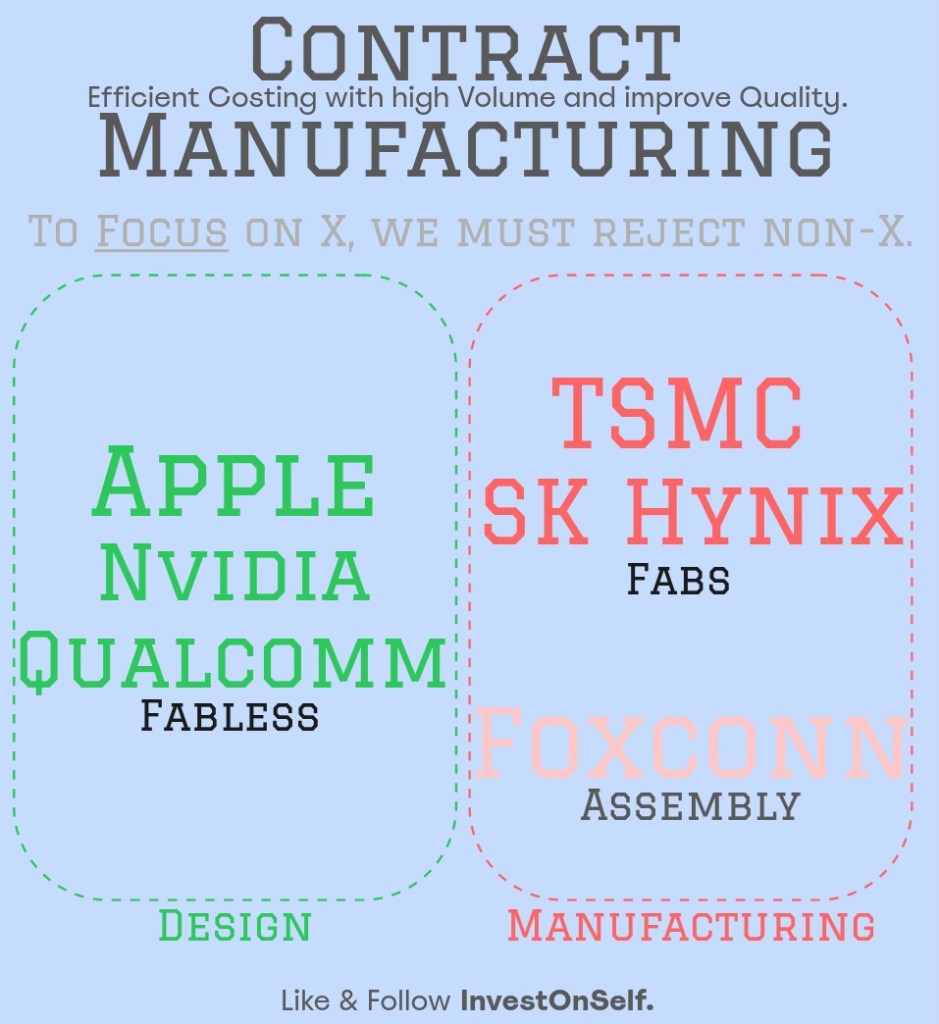
The Godfather of Technology in Taiwan, KT Li envisioned contributing more to the semiconductor supply chain than just assembly, and TSMC was founded as a FAB to focus only on manufacturing, not designing. This helped many fabless companies like Apple, Qualcomm, Nvidia, etc. to focus on their respective designs and rely on fabs for manufacturing. Because creating and then maintaining a fab is like having a pet shark in the pool. AMD was in fabrication but eventually sold it to focus on designing.
Fabless companies focused on their products’ design portfolio and used fabs (aka foundries) for the manufacturing of their chips to avoid the huge maintenance and operational costs of running a fab.
So, to focus on X, we should reject non-X. Note: X is not short messaging app here. 😎
Silicon Shield:
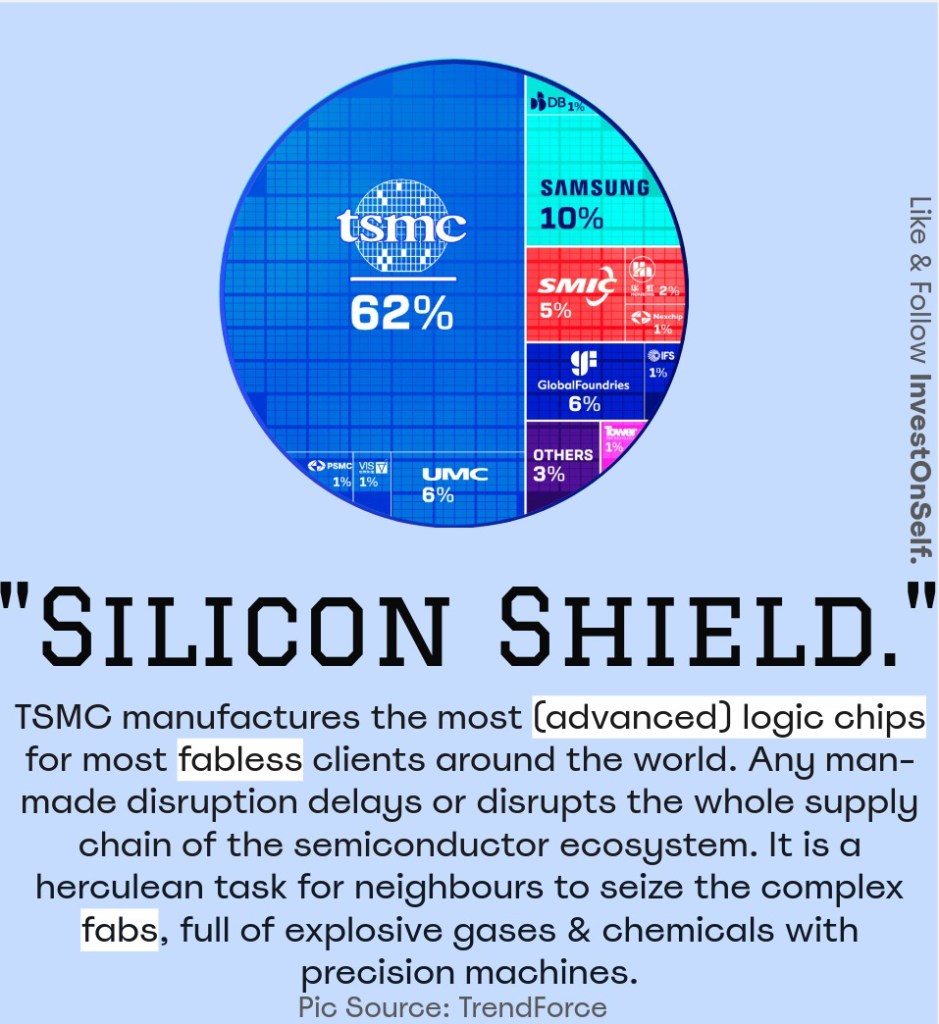
The Godfather of Technology in Taiwan, KT Li envisioned contributing more to the semiconductor supply chain than just assembly, and TSMC was founded as a FAB to focus only on manufacturing, not designing. This helped many fabless companies like Apple, Qualcomm, Nvidia, etc. to focus on their respective designs and rely on fabs for manufacturing. Because creating and then maintaining a fab is like having a pet shark in the pool. AMD was in fabrication but eventually sold it to focus on designing.
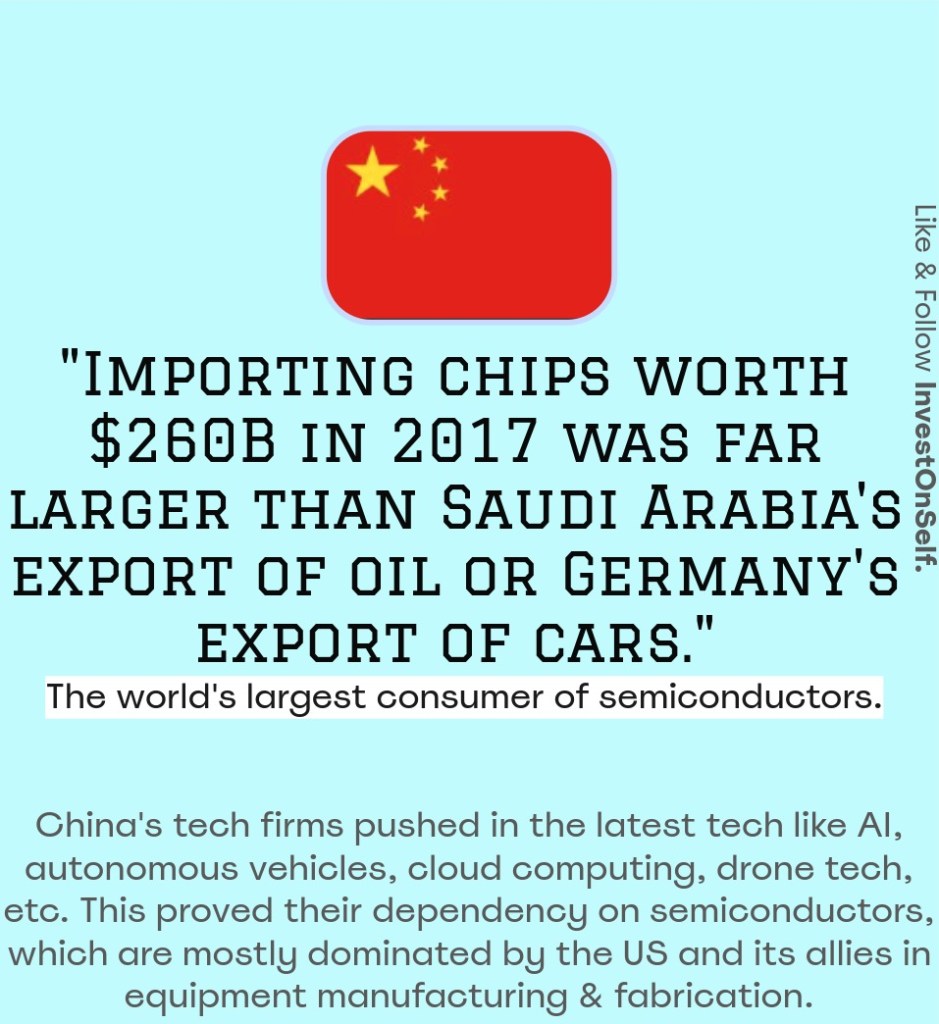
China’s tech firm has seen explosive growth in hardware sectors like autonomous vehicles, mobile and its part manufacturing, drone tech, etc. This led to more spending on the import of chips ($260 billion) than oil (around $162 billion). So the Chinese government created a strategic goal to reduce the import costs and to focus on building indigenous fabrication and equipment manufacturing, which is currently dominated by Taiwan and South Korea for the former and Japan, the Dutch, and the US for the latter.
To contribute or know fascinating facts about tech and psychology, check out/join @ InvestOnSelf.

 InvestOnSelf
Leave a comment