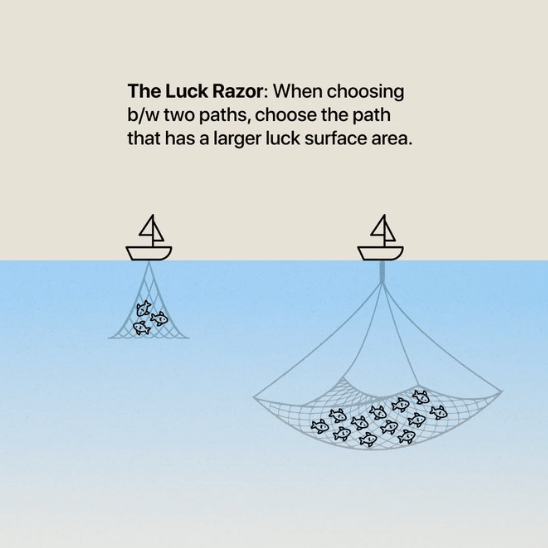
Two influential countries always try to gain power, more power and lead the rest. Like money, events compound over time. One such event triggers a semiconductor boom never before, and it is ubiquitous in different forms in our lifestyle. Top countries with many companies entered into this domain as it’s complex, high-tech, and vast scope. So surface area of luck played a significant role in this. Do you know how the semiconductor market came into the limelight, which created the path for advancement of ML, deep learning, AI, etc.?
US: Product and Market
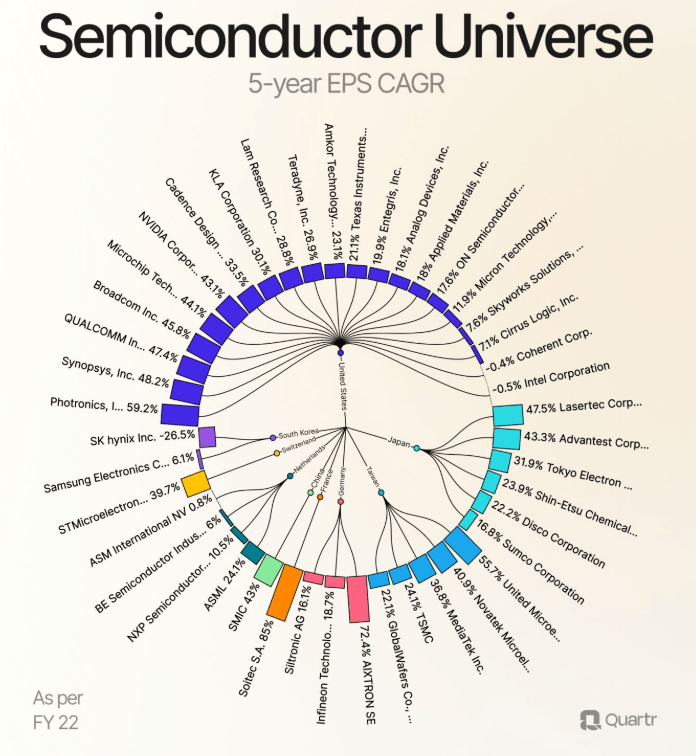
In 1957, history was created with the first space satellite to space, known as Sputanik, by a Russian space agency, and the US Space Agency didn’t want to lag behind in it. In the same year, Fairchild was founded by Traitourus Eight, and they got their clients for their IC product. This triggers the growth of the semiconductor industry, and it’s usage, i.e., 95%, was restricted to only the Space & Defence sectors by 1965. Also, many US-based semiconductor companies bloomed and started to shift the assembly unit to Asia for cheap wage.
Japan: Salesman of Transistor
By 1976, the Japanese government recognised the importance of the semiconductor industry and introduced the VLSI Program to subsidise and promote collaboration between Japanese firms to gain their feet with a deadline. Low capital cost, vertical integration, and efficient engineering in Japan led to the rise in semiconductor production. In 1979, the first handheld music system, Walkman, was released by Sony, and this hit pushed the industry into the consumer segment. Also, Nikon & Canon are into semiconductor equipment manufacturing.
South Korea:
By 1982, the South Korean minister introduced a nation-wide program for semiconductor R&D and got technology know-how from US-based companies. The South Korean government followed the same process as the Japanese, like subsidies and programmes to establish collaboration between companies to produce DRAM chips. Samsung and SK Hynix are the leading South Korean companies in this segment.
Netherland:
In 1984, Dutch tech giant Philips spun out it’s internal semiconductor division to form a semiconductor equipment manufacturing company known as ASML. It benefitted from it’s location in the Netherlands and the collaboration of TSMC as clients for their machines. US tech giant Intel, Samsung and TSMC funded for EUV system research, which went on for couple of decades
Taiwan: Silicon Shield
In 1987, then politician and economist of Taiwan, K T Li, envisioned contributing more to the semiconductor supply chain than just assembly. So, he invited Morris Chang and gave him free hand. Morris Chang, who was known to make TI Chip production more efficient, took this opportunity to fulfil his idea of establishing ONLY semiconductor manufacturing units, TSMC. His knowledge, experience, and contacts brought many US-based fabless companies as clients, and then the rest is history.
France:
In 1989, IBM started research on wafers on which chip patterns are printed. In 1992, SOITEC was established in France by a research group and marketed as a wafer (silicon on insulators) as a high-performance material for manufacturing electronic chips. They have monopoly in this part of the supply chain with customers around the world.
China:
The Chinese company SMIC also joined the semiconductor race by following in the footsteps of TSMC. In the year 2017, China imported chips worth $260 billion, which was far more than Saudi’ Arabia’s oil export or Germany’s car export price. The Chinese government realised the ubiquity of semiconductors in both common and advanced technologies like robotics, AI, defence, etc. and invested hugely to gain a majority stake in the semiconductor ecosystem.
Summary:
- The semiconductor universe is a very complex, costly, and time-consuming process.
- The US started the semiconductor innovation, then Japan took it to consumer electronics. And other countries joined this ecosystem and built a strong supply chain networks.
- US is ahead of Russia due to surface area luck in this ecosystem and played a leading role.
 InvestOnSelf
Leave a comment