In our childhood, our guardians advised us to attempt those subjective questions for which we knew the answer best first, and then the subsequent questions. Also, there is a saying, “First impression is the last impression.” Why so? Do you know why first activity, first impression, first meeting, or attempt question for which we knew the answer first matters a lot? The positive impression in one area to positively influence one’s overall opinion or feelings—including things we have not observed—is known as the Halo effect. This cognitive bias leads us to often make a judgement without having a proper reason, by which judgement is different from real one. It plays a large role in shaping our views about people, situations, events, etc.
What is your first impression of these headlines?
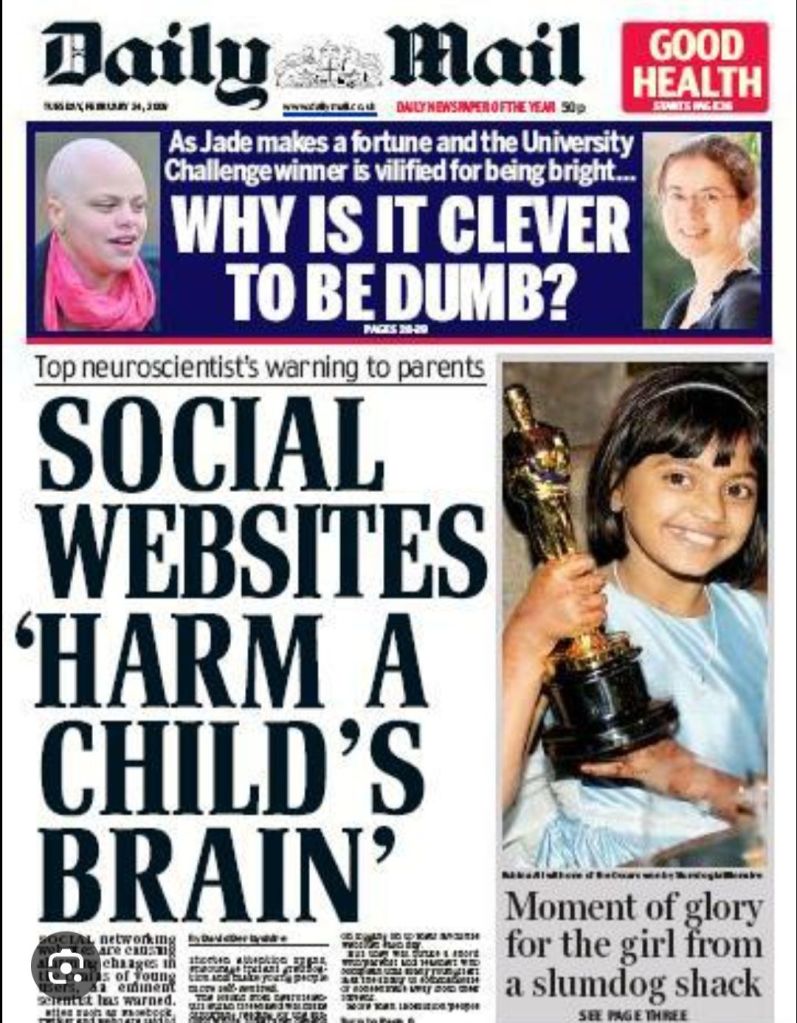

In most newspapers, the headlines, as per the newspaper, their respective editor and reporter, appear on the front page. These few top-selected stories are displayed with some customisation, like bold, big fonts, font types, and sometimes with different colours. Of course, these customisations ease the reading effort and draw our attention to make us jump to the conclusions, but that can’t guarantee the depth and credibility of the information. And we start to read that customised section first instead of other ones that are less or not at all highlighted. Many people look through the newspaper daily for some time, generate impressions with this, and get emotional with the dramatic representation. This is known as WYSIATI, what you see is all there is. This is not only true for news but for everything that draws our attention with little evidence in the digital era.
We, as individual investors, flocked to the companies that drew our attention because they were in the news, and the results are as below after holding more than a decade. Unlike traders and individual investors, professional (like fund houses, AMCs) investors are more selective in responding to the news, so they generate better gains over time.

Let’s take a moment and try to solve a bat and ball problem before moving forward.
Q: A bat and a ball cost $1.10 in total. The bat costs $1.00 more than the ball. How much does the ball cost?
Now, let’s consider reading a book, which seems boring many times. It is not only boring for students but for adults too, who have finished educational levels. If, by any chance or motivation, we start this process again but it is difficult to continue or at least finish the book that we have started reading.
The laggy impression of non-customised presentation activates system 2, which is lazy, analytic, and engaging unlike system 1, which is quick to react, intuitive, generate impression and jump to conclusion. For e.g., calculation of 17 * 24 requires analysis,while 2 * 2 can be intuitive.
Why is it boring to read a book?
No doubt books have more data points and in-depth information than newspapers and any other form of information. But we have to put more effort into book reading, at least in the beginning of this habit. Sometimes, it is boring, as some books are not customised with bold, big fonts or colours. Many times, these books use the same fonts (or the small fonts), which go on pages after pages with very few pictures. All this leads to more effort to draw our attention for this activity.
The international bestseller “Thinking Fast and Slow” was written by winner of the Nobel Prize, Daniel Kahneman, which contains many data points and many studies to differentiate between two systems. But it is not easy to finish because this book demands reading in between the lines to understand human psychology and behaviour, unlike newspapers or any other books.
Answer to the above question: The cost of a ball is not 10 cents. If your answer doesn’t match, then reread the question slowly and try again.
Do you know, why should we try hard not to generalise things? What should we look for instead of blaming villains? Then check out this book: Factfulness.

 InvestOnSelf
Leave a comment