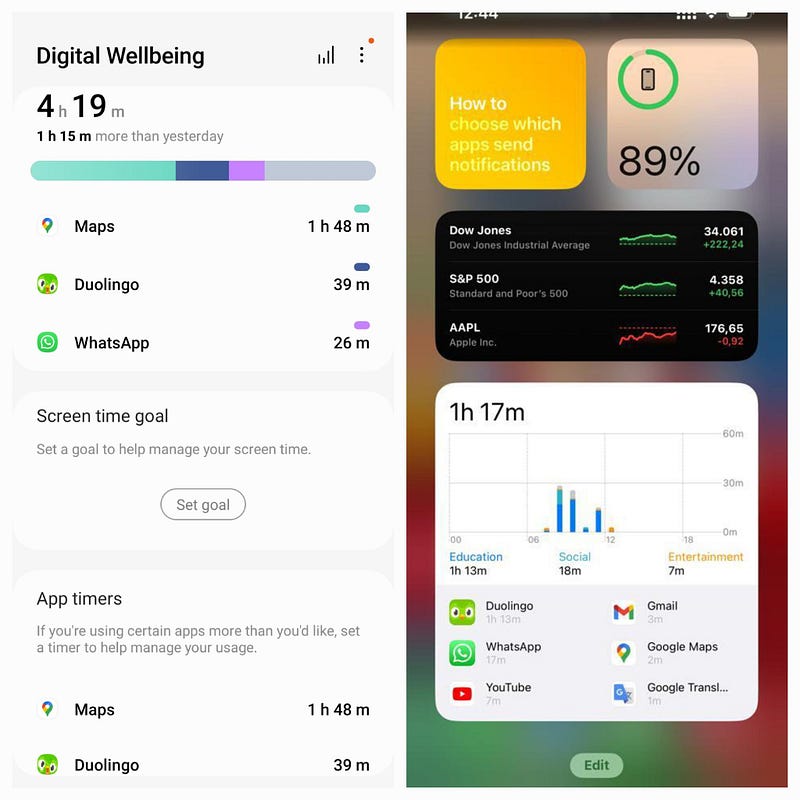

Have you seen this Icon before in your (Android) Mobile phone? If no, then please scroll below to know about this very important application.
Note: iPhone has similar main screen application, but not easily visible.
In the digital world, it is very difficult to track our most precious and valuable resource, TIME, as new age applications change our behavior to get more attention. Google launched this application 5 years back to balance our digital lives, but we still know very little about it.
We are getting busy day by day with the digital world but not productive.
Why we know very little about this?
- We know little about this application because it is not easily noticeable, unlike other social media apps, when we buy a new smartphone or use it. Maybe big tech companies don’t encourage us to use this app. Because proper usage of this app may balance our digital lives and create headwind for tech companies that try to modify our habits, our choices and in turn, our lives.
- As it is not visible (or not presented properly), then it is not easily accessible, so this is skipped from our daily behavior, which defies the Fogg Behavior principle(B = MAP).
Do you know how many times you unlock your phone in a day?
What can we see in this app?
When we open it by searching explicitly in android mobile search, we notice a dashboard with time spent today (relative to yesterday’s usage) and other statistics with respect to our behavior. Like Our screen time, how many times we unlock our mobile phones, which are the top apps this week and for how much time, monthly screen time goal, etc. Also, there are some options like Focus mode, which enables you to do deep work without distraction.
Note: iPhone has a screen time graph with respect to different categories.

Which apps top the list on the weekly report?
We find social media apps(aka shallow choices) top the list in screen time usage. Similar patterns reflect the behavior of many smartphone users. And the reason behind this is Ingrained Habit, which is a behavior with little or no conscious thought, simple actions(e.g. scroll), variable rewards(e.g. like on Facebook, reward points on Candy Crush etc.) and frequency of usage over a period of time. These applications are designed in such a way to impact mass users, e.g. 2.5 billion users per month on Instagram.
What is rewarded, is repeated. What is punished, is avoided. — Atomic Habits.

What is the price(ROI) we pay?
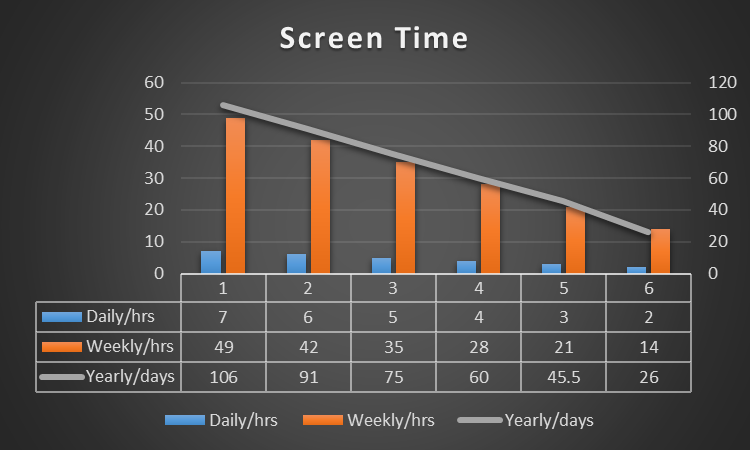
This is the most important section as it gives the profit and loss statement. As per the above screenshot dated November 2022, my screen time was around ~4 hours/day, 28 hours/week (~1+ day) and ~52 days/year. So I spent almost 60 days per year (i.e. Column 4 in below picture) in screen time. This is kind of sunk cost that I paid for my screen timing. Can you comment on the price you paid for your screen timing?
Everything has a price, but not all prices appear on labels. — The Psychology of Money
What is next?
As we now know the math of what we invested and what we gained over the period, it is time to reflect and improve our lives without getting controlled by these connected network tools.
1. Use Screen Time goal: Let’s set an achievable digital limit for shallow choices and allocate more time to invest in ourselves like doing physical exercise, spending time on productivity tools like learning a new language, creating contents or simply taking a break and resting our conscious mind.
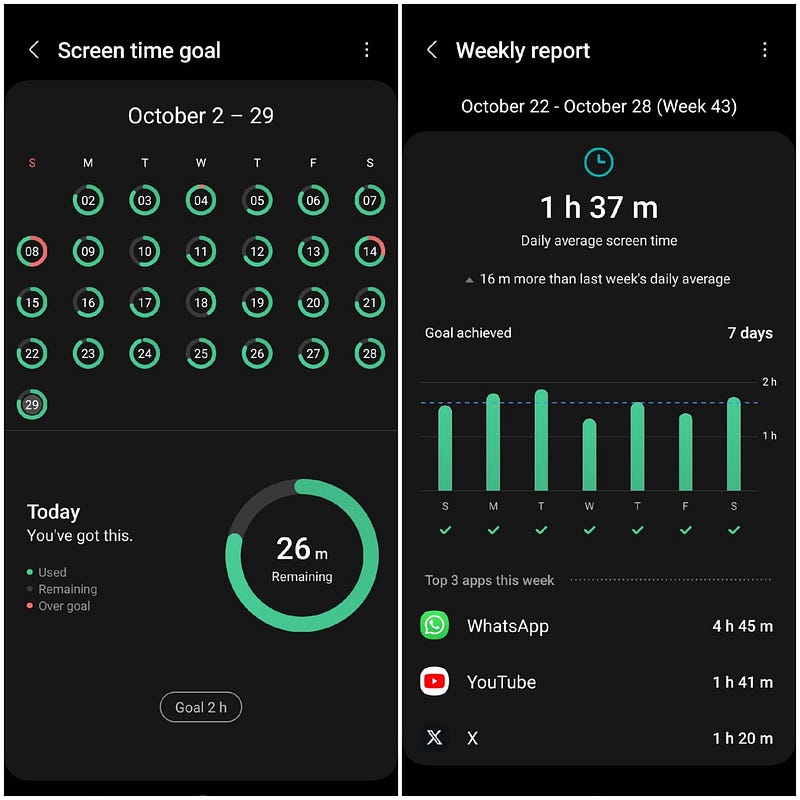
2. If productive apps like learning language apps (e.g. Duolingo), content creation apps, fitness apps etc. are already listed in top five of weekly report, then it is a good sign as we are investing in ourselves.
3. Distraction free: Many times it took more time to complete a task properly when we are distracted or multitasking because of attention residual. Use focus mode to achieve this.

So next time when you are running out of time but want to do something meaningful, then you know what to do. It is up to us to decide if we want to control the technology, not the other way around.
Our Mobile phone knows everything about our behavior.
Give preference to being a producer rather than a consumer of the digital world to thrive in the new ecosystem.
Note: We can use similar applications available in app stores and this is not recommendation.
 InvestOnSelf
Leave a comment