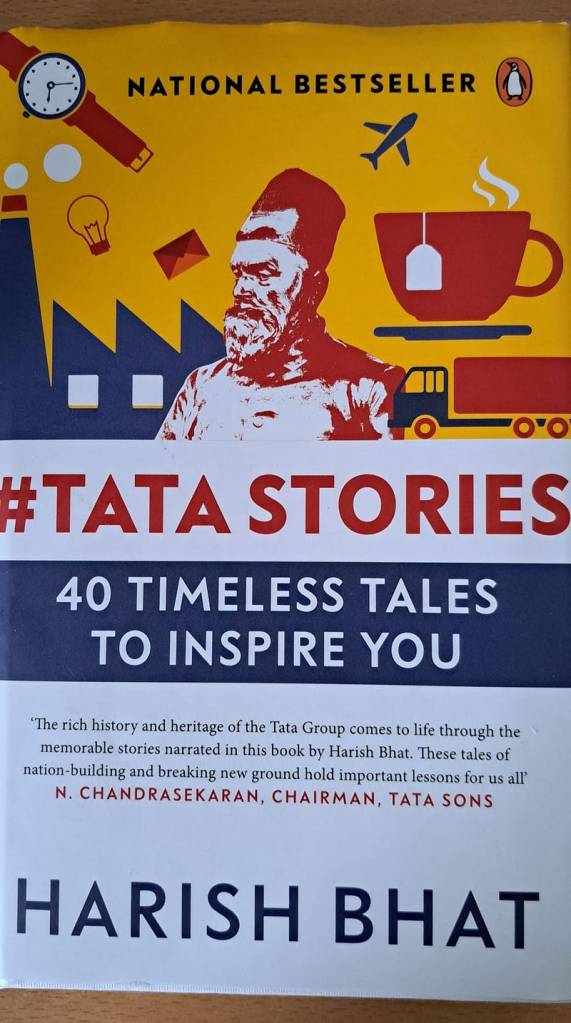
“Mother Bharati has long been crying for a man among her children, and in Mr Tata she has found the son of her heart.” ~by HinduNewsPaprer@1898
From Tata Steel to Tata IPL, We are well-versed in Tata Companies’s multiple products and services in our lives. But do we know the fascinating stories behind all these products. This book presents 40 small stories about four generations of Tatas who have made great impacts on Indian society by building steel plant, hydroelectric power plant (Walwhan dam), super computer (EKA), great institutes (like IISc, TIFR), CSR projects, etc. Before diving into details, let’s check how well we know about this Indian conglomerate, which was founded 155 years ago, in the year 1868.
Did you know when India got its first crèche (day care) facility to improve Productivity, and where it was introduced?
Who represented India’s first National Economic Plan, and what was it called?
Who travelled with Vivekananda to Chicago, and what was the commonality between the two great minds?
What does the SUMO (aka Tata SUMO car, not Japanese SUMO wrestler) abbreviation represent?
In Which Olympic game, India participated for first time, and how?
Who lost the historical Aga Khan Race but won hearts?
There are many such queries that are unveiled in this book. Also, this is not only about Tata’s but about the ecosystem that they created with other great minds in India. If you are curious to explore such great and eventful stories, then just scroll down till the end for the next few minutes and I am pretty sure you will come to know something new.
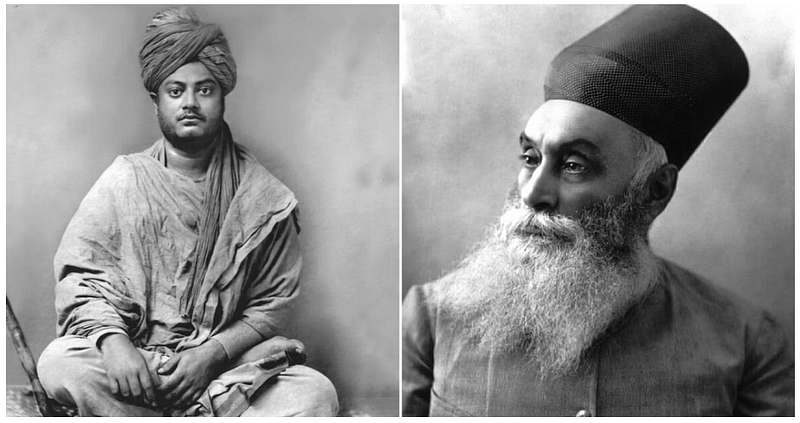
Jamsetji Tata, known as the founder of Tata Group, travelled in the same ship, the SS Empire with Vivekananda to Chicago from Japan to represent India in World Forums like the World’s Parliament of Religions and the World’s Columbian Exposition, respectively. When they shared their common nationalistic vision, that led to the foundation of great institutions like IISc, Bangalore, and the Ramakrishna Mission.
Tata Steel was envisioned by founder Jamsetji Tata asked American consultant, Charles Page Perin to build it in India. But he didn’t live to see the establishment of this. In 1907, the company registered in Sakchi (now known as Jamshedpur) under the leadership of then chairman Sir Dorabji Tata. Many American and British technicians were hired with local expertise to produce higher quality steel. The company faced many challenges, like competition with British quality comparison, financial issues, supply to the British army for World Wars etc., but it overcame all of this with time.

At 24, JRD Tata, the son of RD Tata who was cousin of Jamsetji Tata, lost the historical Aga Khan Aviation Race (to complete the fastest trip from London to India or vice versa) to 17-year-old Aspy Engineer. Interesting fact, they flew in opposite directions, like Aspy flew from London to Karachi (in 1930, part of India) and JRD Tata flew from Karachi to London. Aspy was looking for spare spark plugs as his plane was not starting, which JRD Tata gave him when he grounded at Cario airport. After winning the race by 2 hours and 30 minutes, JRD Tata received a warm welcome from Aspy at Karachi airport and won hearts. Later, both enthusiastic aviators placed in the top positions in their respective fields.

In 1944, India’s first national economic plan, the Bombay Plan, was prepared by then visionary minds (JRD Tata, GD Birla, Kasturbhai Lalbhai, Purshottamdas, Lala Shri Ram and other technocrats) by envisaging the independence of India post-WWII. This plan made the British Empire and other groups, like Gandhian followers, uncomfortable. This plan detailed out the type of industry and strategy required to improve the diets and upbringing of Indians economically for the next 10 years with an estimation of 10K crore rupees. This plan was acknowledged after 40 years by then-Vice President R. Venkatraman in 1986.
In 1877, Empress Mill, the first industry, was founded by the first chairman of the Tata group, Jamsetji Tata, in Nagpur. The Mill was known for its high-quality textiles across the globe. Two crèches were established to support and improve the productivity of women employees in the mill. Mill also introduced a provident fund, a gratuitous pension, and a cooperative credit society for employees in the pre-independence era.
“What came from people, has gone back to the people, many times over.” — by JRD Tata
The Jubilee Diamond, twice as large as the famous Kohinoor Diamond, was bought by Sir Dorabji Tata for his wife Meherbai at the 1900 Paris Exhibition. In 1870, this diamond was discovered in South Africa, then polished in Amsterdam before being handed over to a London merchant who sold it at the Paris Exhibition. During WWI, Tata pledged to save Tata Steel, which was facing a financial crunch. Later, they sold it to fund the Sir Dorabji Tata Trust. This trust created Tata Memorial Hospital, Tata Institute of Fundamental Research, etc. No diamond has served worthier causes, and it was possible because of two wonderful hearts of gold.
Tata SUMO is named after Sumant Moolgaoker, a brilliant technocrat who headed Tata Motors (then called TELCO) in 1949. He never compromised on quality with tough decisions and always against “chalta hai” attitude. He revived a lake close to the Tata Motors Plant in Pune with a plantation by respecting social responsibilities.
Sir Dorabji Tata, the elder son of Jamsetji Tata, took initiative with then Governor of Bombay and personally financed the Indian National Team in 1920 Antwerp Olympics. After that participation, India took part in every Olympic’s game. In 1927, he became the Chairman of IOA (Indian Olympic Association) and added many facilities to support the games culture. In the 1928 Amsterdam Olympics, India, the only non-European country in the hockey game, won the first gold medal in the Olympics as a National Team.
JRD Tata was the founder of Tata Airlines, which became AIR India. The airline was so close to JRD Tata, that he used to pay constant attention to nitty-gritty details like the roll in the flight toilet, tea taste, etc., and inform the crew to improve on this. People in Geneva could set their watches to the time at which airlines flew over their city. The airline reached new heights for its punctuality and high standards, and then Singapore’s PM, Lee Kuan Yew advised their airlines to study the high standards of Air India.
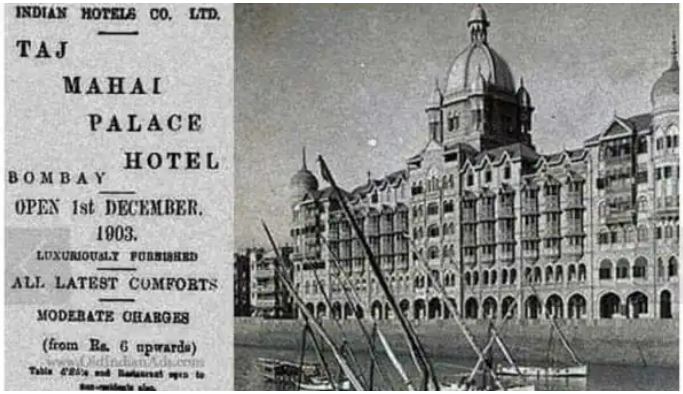
After establishing India’s first steel plant, the first hydroelectric power plant, and the foundation of a technical university, Jamsetji Tata planned to construct the first hotel in the Apollo Blunder area of Bombay. This is known as Tata’s white elephant because of the stupendous luxury and price used to build it. It was the first commercial building to light electric bulbs. There were many rumors behind the reason for this iconic hotel, but the fact was that Jamstetji wanted to attract visitors to India and improve the quality of Bombay. Like he asked Charles Page Perin, the best American metallurgist consultant to build Tata Steel Plant, he brought high quality accessories like German Lift, American Fans, Steel pillars from Paris, Turkish bath etc. This hotel survived two World Wars and other attacks but epitomizes the spirit of Bombay.
“If you can’t make it greater, at least preserve it. Do not let things slide. Go on doing our work and increasing it, but if you can’t, do not lose what we have already done.” — by Jamsetji to RD Tata.
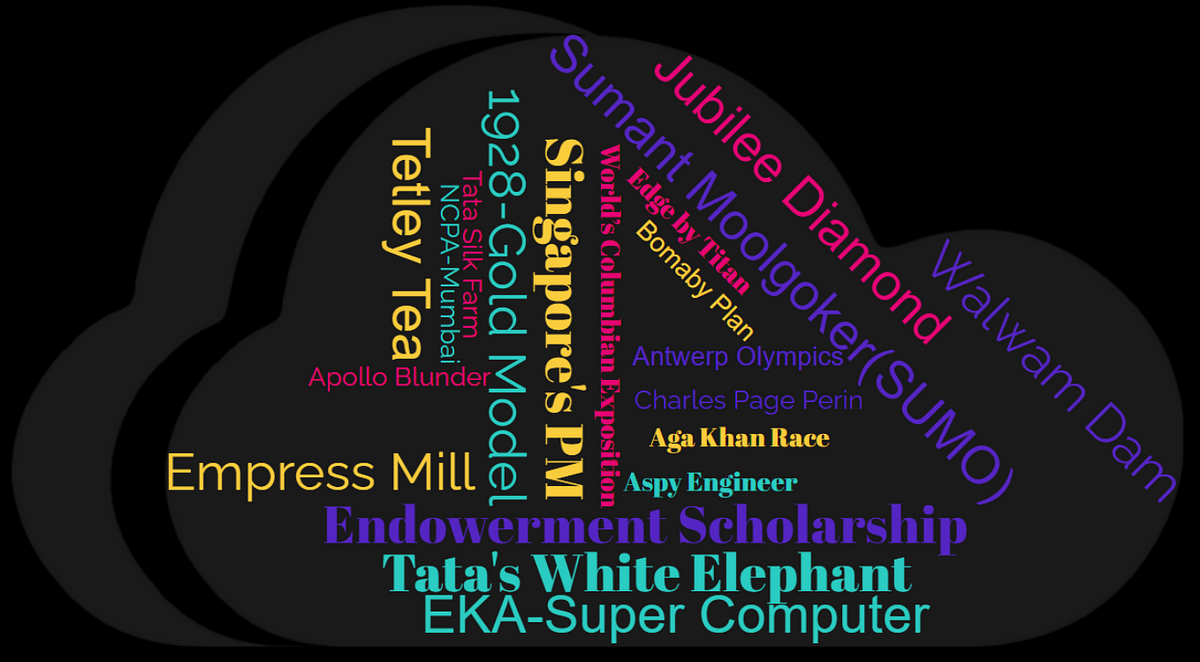
In a true sense, all Tata chairmen tried their best to follow their founder, Jamsetji Tata’s advice, for over a century. This is an attempt to summarize some important stories from the book written by Harish Bhat. We should not stop here, instead, read the complete book to get the most benefit out of it. Keywords (~answers to the questions asked in the beginning) that you would like to remember for the future.
To know about Amul Story, check here I TOO HAD A DREAM.
Why short-form videos are popular, check here SHORT FORM VIDEOS.
To create a good habit and achieve compounding effect, invest 4 mins to read the amazing Book Atomic Habits’s summary.
Reference:-
 InvestOnSelf
Leave a comment