
Japan, once devastated and surrendered in WWII, came back strong in just two decades with double-digit growth by setting up multi-national companies. Japan’s journey during this period gave many lessons, principles, and successful stories to the world. One of the principles this nation & its companies built up is Kaizen, continuous small improvement to outsmart the US and other developed countries with sustainable quality growth for the next couple of decades.
As the name indicates, this book shows the importance of small goals, questions, thoughts, actions, & rewards in our daily routine and its advantages. Let’s explore one by one.
Small Goals:
In a fight-or-flight situation, where a lion/tiger is charging at you, our brain doesn’t waste much time thinking carefully by taking time. But quickly the brain shuts down all unimportant processes like digestion, hunger, and other desires and triggers them to run away. How??
Let’s first understand the evolution of the human CPU, i.e. the brain and its main parts:
- Reptilian Brain, the oldest brain, helps with daily routines like waking up in the morning and sending off to bed in the night.
- Mammalian Brain (Limbic), consists of Hypothalamus, Amygdala & Hippocampus, responsible for emotions, alertness, etc.
- Cortex (Neocortex), the latest brain to evolve, which is used for creativity and rational thinking.
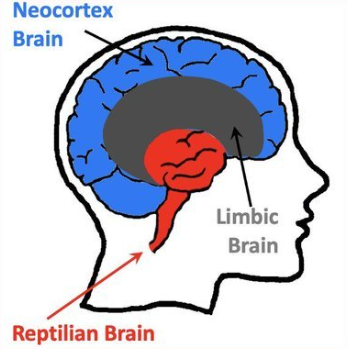
When we have a goal with bigger challenges, the Amygdala part of the mammalian brain gets activated to anticipate quick actions and restrict our access to Cortex, which is the thinking part of the brain. Unconsciously, fear can sabotage our best intentions. So,
Bigger Goal — More Fear — Access to cortex Restricted — Leads to Failure.
Smaller Goal — Less Fear —More access to cortex — Leads to Success.

Small Questions:
Our brain loves questions. And the brain won’t reject until the question triggers fear with the scale and triggers Amygdala.
When we keep asking the same question over a period of time, the hippocampus part of the mammalian brain has no choice other than to pay attention to the question and start searching for answers or solutions.
Curiosity of Perry Spencer led to the invention of the microwave, which is now part of every household kitchen.
Small Thoughts:
The will to prepare has to be greater than the will to win.
Mind sculpture is a method that can help to perform difficult tasks by thinking and feeling the experience in mind. In 2008, Michael Phelps used this method for the Olympics and benefitted from it. This needs to be practiced before some days of the actual event, repeatedly in a disciplined manner.
In crucial events, some people/teams win games mentally before the start of a game with less or equivalent practice.
Small Actions:
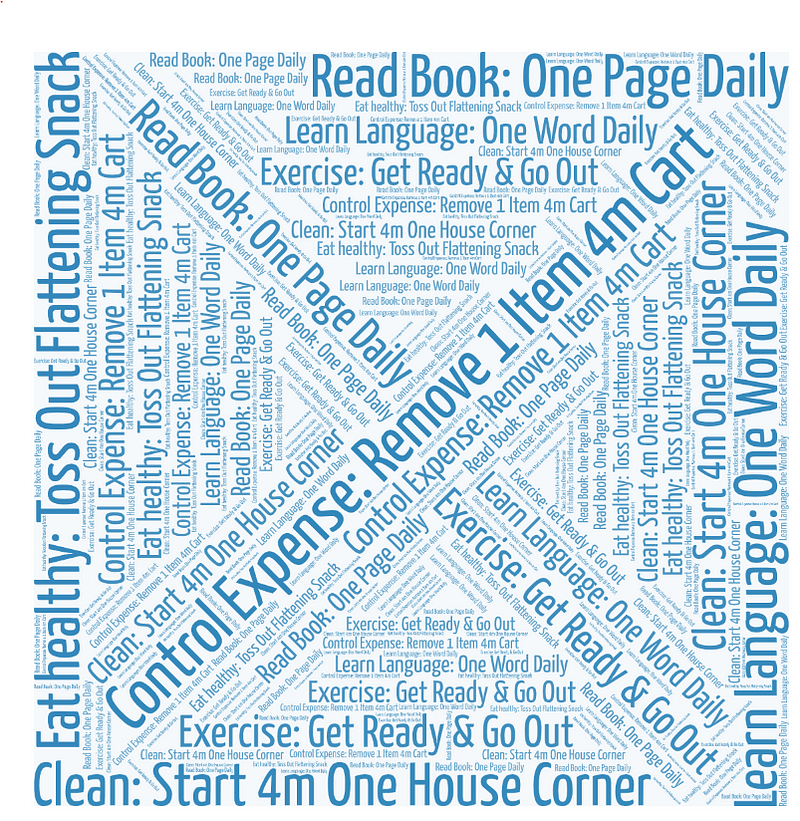
No matter how much you think of goals, prepare questions, & get mentally strong, eventually we have to take actions to make it happen. All actions need not be rigorous, which creates fear/doubt. To outfox fear responses, do small actions that enable our brains to create new, permanent habits at a brisk pace. For example:-
Small Problems:
Focusing on small mistakes/problems now can save years of costly corrections.
We should train ourselves to spot the small warnings and solve them to avoid future painful remedies. This is true for each individual, team, and company.
High-reliability Organizations, like nuclear reactor centers, ICUs, airport control rooms, etc, where work is so vital/crucial that they all are forced to find ways not to fail.
Small Rewards:
It is difficult to come across bold and ground-breaking ideas for everyone. Smaller ideas may be more practical, useful, and easy to implement. Also, small ideas can lead to bigger ones.
Small rewards, like Fountain Pens, show gratitude while preserving the sense of pleasure in a job well done, unlike big rewards, which risk inhibiting or stunting the native drive for excellence.
This is the difference between the US and Japanese culture of reward for ideas, which in turn reflects a rate of participation and acceptance of ideas for problems.
Small Moments:
When well-known songwriter Warren Zevon was suffering from terminal cancer in a hospital, a reporter asked him what wisdom he gained from his illness. Zevon’s answer was “Enjoy Every Sandwich,” a pure Kaizen moment.
There were small observations/changes that led to a big impact.
- American Airlines saved $500K by dropping Olive from its breakfast menu.
- 3M Customer Message created Water-proof sandpaper, a new product.
- Letter of Credit to Credit Card by President of American Express.
- Invention of Instant Camera by Edwin Land during Vacation.
- Diseases were cured by looking at who didn’t get the disease.
As the brain develops, we get two more capabilities 1) Able to recall the past; 2) Able to anticipate the future. That’s why we enjoyed more when we were kids.
If you still don’t believe it, then recollect the story of the tortoise and the rabbit, and the rest is history. Small steps lead to delayed gratification, which is sustainable and easy to maintain in contrast to radical changes. This book has explained many case studies to deal with different situations of life.
This is an attempt to brief some important points here. We should not stop here, instead read the complete book to get the most benefit out of it.

Read the fascinating & famous Amul Story in 4 Mins.
 InvestOnSelf
Leave a comment